Workflow & systems
Workflow automation & integrations
Turn recurring handoffs into reliable flows — fewer dropped balls, less tab-hopping, and automation your team can actually run.
We map how work really moves between people and tools, then automate the repeat steps with owners, logs, and fallbacks — so the fix still makes sense in six months.
- To a credible pilot
- 2–4 wksTo a credible pilot
- Ops can run without us
- RunbooksOps can run without us
- Logs & named owners
- Audit-readyLogs & named owners
Start here
Automate what repeats — own what matters.
If any of these sound familiar, this service is likely worth exploring.
When work lives in six tools
We map the real path from trigger to done, then wire systems so data and notifications land where people already work.
When “we’ll fix it in Slack” stopped scaling
We replace informal routing with explicit statuses and handoffs — so accountability matches how busy you actually are.
When you need proof, not vibes
Every critical path gets logging and a named escalation — stakeholders see what ran, when, and why.
What you get
A clear result, not a box of technical parts
We agree on the business outcome first. The tools, scope, and timeline follow from that.
Time back where it hurts
We target the steps that burn hours every week, not novelty automations nobody adopts.
Governance by design
Owners, logs, and fallbacks are part of v1 — so ops isn’t debugging mystery failures at 9pm.
Built to evolve
You get documented flows and runbooks so the next change is an iteration, not a rewrite.
The plan
What we'll work through together
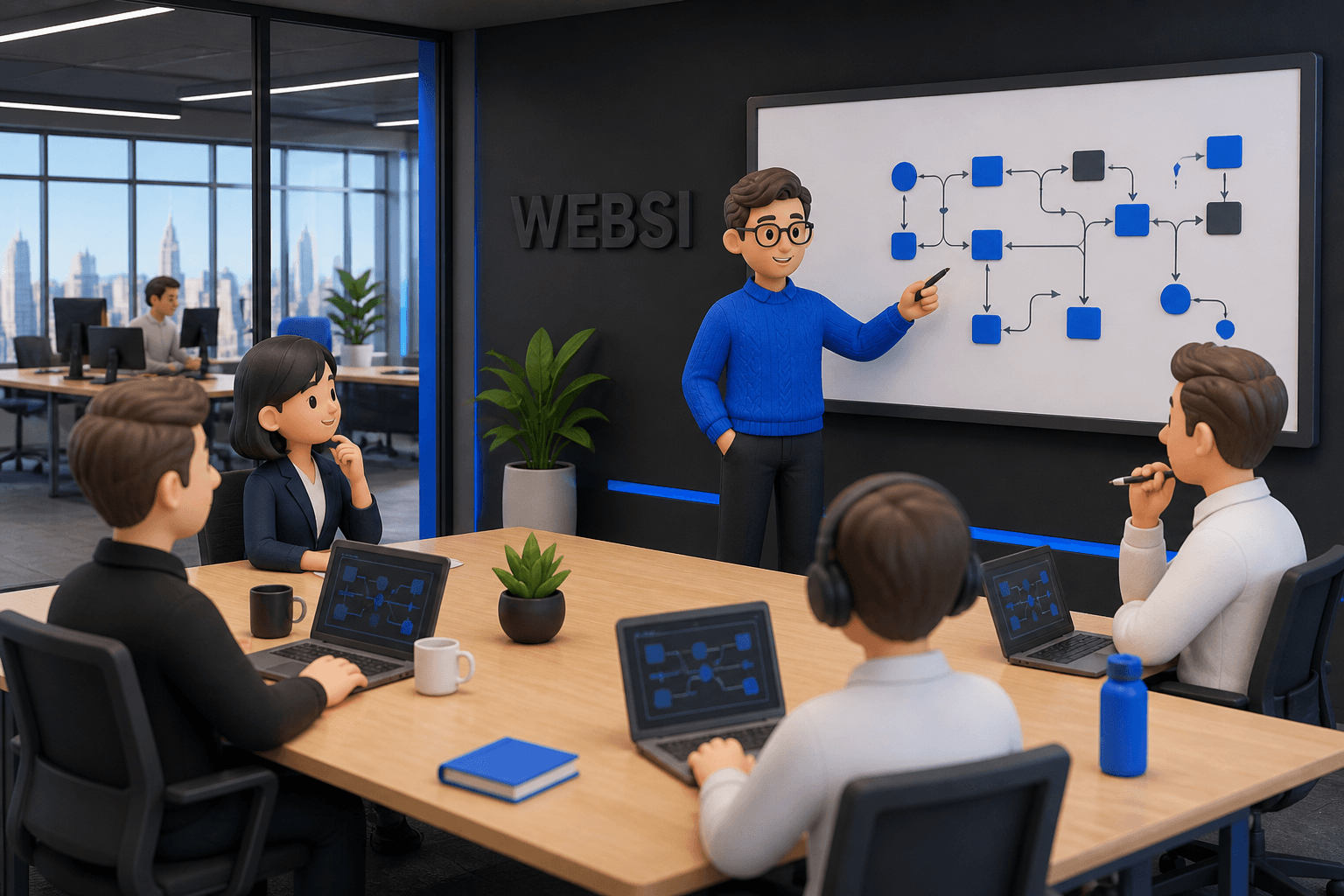
Most “automation” fails because the human process was never written down. We start with a dry, honest picture of triggers, handoffs, and exceptions — then wire Monday.com, Airtable, inboxes, and APIs so work lands in one place. You get runbooks and escalation paths your ops team can run without calling the person who originally built the Zap.
Tools we can connect
- Monday.com
- Airtable
- AWS
- Cloudflare
- React
What to bring
- Lock step names and statuses once — unpicking role bugs after launch is the expensive kind of rework.
- If humans can’t agree on a dry-run, automation only encodes the argument — fix the flow first.
How it works
Four simple steps from problem to launch
You always know what we're doing, what you need to review, and what happens next.
Map today’s workflow
Short interviews plus a live walkthrough: who touches what, which tools hold truth, and where things quietly break today.
Design the target flow
Statuses, naming, and failure paths on paper first — so nobody discovers a role gap the week before go-live.
Connect systems
APIs and connectors with logging, retries, and alerts to named owners — not silent drops into the void.
Document handover
Runbooks: how to pause, replay, escalate, and extend — written for whoever is on call, not just the implementer.
What changes
The practical difference after launch
These are the improvements we design toward. We define the exact measures with you during discovery.
- Repeatable operational work with fewer manual errors and clearer SLAs
- One agreed story for data as it moves between teams and systems
- Automation you can extend when volume, regions, or products grow
This is usually a good fit if…
- Ops teams still routing work through Slack, email, and three boards
- Companies tidying up a patchwork of early no-code experiments
- Leaders who want speed with governance — not unowned “shadow automation”
Common questions
What you may want to know before we talk
Plain answers to the questions that usually come up first.
Next step
Ready to scope this?
Use the structured brief at /start — or send a short note via contact if you prefer.
Explore
Other services
Most engagements blend a few of these — compare scope, process, and fit on each page.
- Portals & internal toolsCustom business applicationsPortals and internal tools shaped around your roles, approvals, and data — from a thin v1 you can ship to users, to deeper builds when risk demands it.
- Practical AIAI integrations & intelligent automationDrafting, classification, and retrieval where they save hours — wired into tickets, CRM, and internal tools with guardrails, review, and cost you can read.
- Records you can trustData cleanup & migrationAlign what “customer” and “deal” mean, dedupe with rules people sign off on, then migrate in batches with checks and rollback — so dashboards and automation finally agree.